Family & Other Stories
Family Stories - Robert, Lord Lisvane
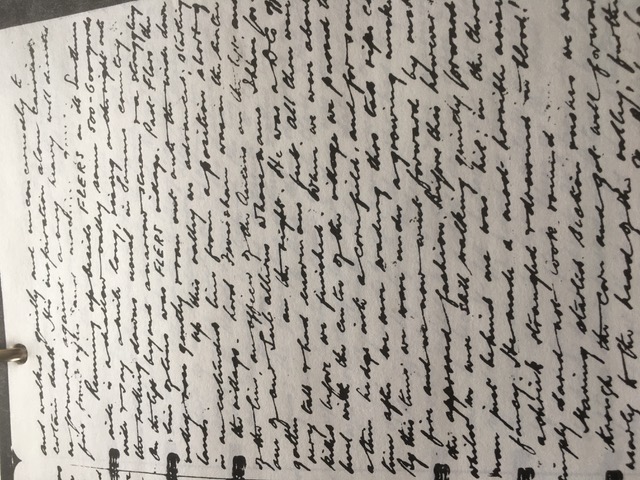
Extract from the diaries of my grandfather, Lieutenant Frank Rogers, 5th Battalion The South Wales Borderers The Battle of Flers-Courcelette, 15th September 1916
"We went forward under Colonel the Earl of Feversham, who was commanding a Battalion of the King's Royal Rifle Corps. He was an oldish man: short and rather fat. He was quite unarmed and wore a braided jacket, Sam Browne belt, kid gloves &c and carried a walking stick, just as though at home. He behaved with very great gallantry and walked quietly and unconcernedly to certain death. His inspiration alone carried us forward against heavy well-directed fire from rifles and machine guns.
"We advanced up a shallow valley in an extended line. Lord Feversham was in the centre of the line, an officer of The Queen's on the far left, and on the far right an officer of our D Company. All three were killed before we finished. When we were about level with the centre of the village we passed through a thin hedge into a cornfield, and for some time after that we were wading through tall ripe corn, under a growing musketry fire. A man just behind me was hit, in the throat I fancy. He made the most horrible noise, a strangled shriek drowned in blood. I simply dared not look round. We lost heavily in the advance, especially in the later stages, and our thin line could not even dig in as anyone trying to do so would immediately be fired upon. We were unable to go forward, but unwilling to go back, and I remember feeling very proud of my men."
Sgt L. T. Daniell, 1st Battalion, New Zealand Rifle Brigade Citation for Distinguished Conduct Medal (Jane's Grandfather)
France Nov. 1917-Mar 1918
For conspicuous gallantry and devotion to duty. He has shown untiring energy in performing the responsible duties of his position, and in action his fine courage and resource have been examples to the men. On one occasion, when all the runners had become casualties, he himself, though wounded, collected the reports from three companies and brought them to headquarters, and then devoted himself to assisting and attending the wounded. In difficult trench-work, when the company was short of experienced officers, his ability and initiative were of the greatest service.
London Gazette, 3 June 1918
My great-uncle, Lieutenant Frederick Turner RE, who was killed on 5th August 1916, on the Somme:
An extract from the newspaper report of his death.
His captain, writing of him, said "He was a very able soldier, a splendid comrade, and one of those rare people who do everything well". In almost the last words he wrote home, dated July 29, he said "Yes, Father, I read of the death of H and M (his comrades). It is sad, but one couldn't wish a better death. Men have to be sacrificed - we are at war. playthings have been put aside and we are in the midst of grim and stern conflict. I cannot imagine a better death than that in action. It is all-sufficing. No need of memorial services - they are superfluous. To die like that is glorious."